
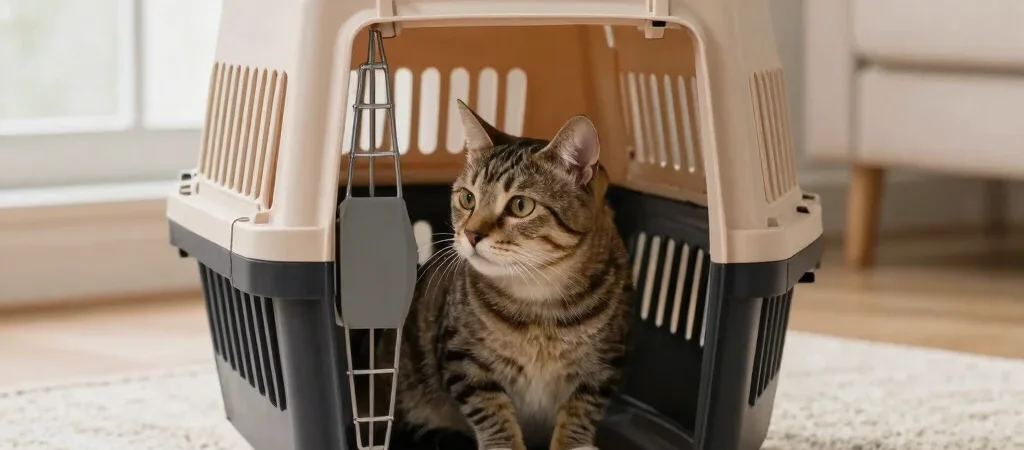
A carrier often gets its first real test when a cat is already wary and the car is waiting outside. Choosing one only by its handle or color misses the details that matter in that moment: how the cat gets in, how the carrier opens, and whether it is stable enough to carry comfortably.
Look at every opening
Top-loading carriers can make it easier to lower a cat in, while a wide front opening may suit a cat who walks in more readily. Some designs provide both options, which can be useful when your cat’s mood or handling needs vary. Check how each door latches and whether you can open it without the carrier tipping or the cat pushing against it.
Choose a steady, workable size
Your cat should have room to stand, turn around, and lie down, but the carrier should still be practical to lift and secure in your vehicle. Compare the carrier’s interior dimensions with your cat’s size, and look at the stated weight limit as well. If you may travel by air, check the specific airline’s current carrier rules before purchasing; requirements vary.
Make cleaning part of the decision
A removable top or easy-to-wipe surface can make cleanup less awkward after a trip. For a soft-sided carrier, check the care instructions and whether its frame holds its shape when carried. Ventilation should be visible on more than one side, and any bedding you add should fit without blocking openings.
Keep it in the daily landscape
Leaving the carrier open in a familiar room gives your cat a chance to investigate it outside of travel time; a familiar blanket inside may help make it less novel. This is not a guarantee that every trip will be easy, but it avoids making the carrier appear only when something is happening. If a product link appears in this guide, it may be an affiliate link that earns us a commission; we aim to describe what to check rather than imply one carrier works for every cat.