
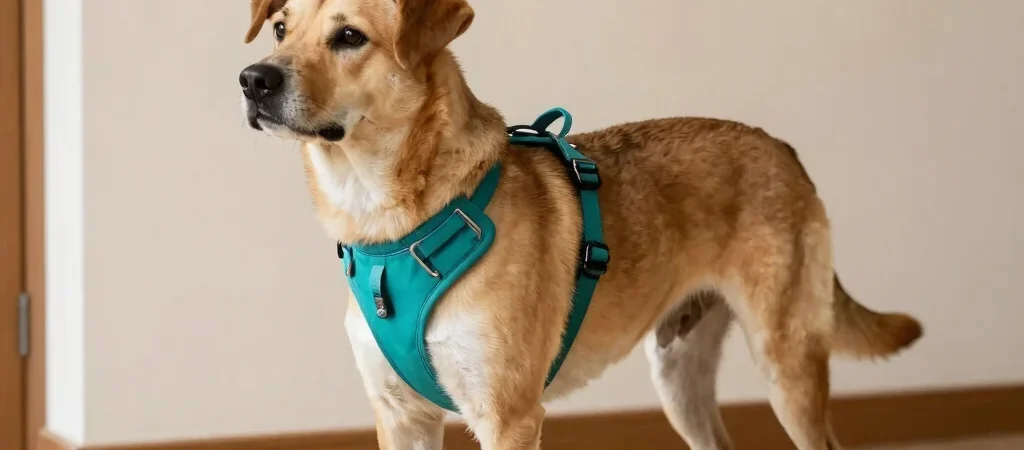
At the pet store, two harnesses can look almost identical. The difference shows up when your dog turns, pulls toward a lamppost, or tries to back out of the fit. Start with your dog’s measurements and walking habits—not the color or the product name.
Measure before you shop
Use a soft measuring tape to check the areas specified in the harness maker’s size chart, often the chest and neck. Measure while your dog is standing naturally, and compare the numbers with that exact product’s chart; sizing is not consistent across brands. If your dog is between sizes, look for the maker’s adjustment guidance rather than guessing.
Match the design to your walks
A back-clip harness keeps the leash attachment on the dog’s back, while a front-clip design places it at the chest; some harnesses offer both. Think about where the leash will attach, how many straps you’ll need to adjust, and whether your dog is comfortable stepping into the harness or needs one that opens around the neck. A simpler design can be easier to put on, but only if it stays secure and gives you the adjustments your dog needs.
Check comfort in motion
Once fitted, check that the straps lie flat and don’t press into the armpits or sit across the throat. Walk a few calm steps at home and watch for shifting, rubbing, or an attempt to back out; recheck the fit after your dog moves. If your dog seems uncomfortable or you’re unsure about fit, ask your veterinarian or a qualified trainer for guidance.
Compare the details honestly
Before buying, check the size range, adjustment points, closure style, cleaning instructions, and return policy. A product description can tell you what a harness is designed to do, but it can’t promise that it will suit every dog or walking situation. If we link to products, those affiliate links may earn Pets Being Pets a commission, at no extra cost to you; recommendations should still explain the trade-offs and what to verify.